Recent Posts
Recent Comments
- joeeuc1942 on Hello fellow solutionist!
- James Rozoff on Hello fellow solutionist!
Quote from tafka on February 16, 2026, 12:55 pmFrom Mead Halls to Modern Homes
Long before electric guitars and digital studios, music echoed through timber halls lit by fire and story. In the age we now call the Viking era, roughly from the late 8th to the 11th century, melodies were carried not by orchestras but by sturdy wooden instruments strung with gut and courage. These were not merely tools of entertainment; they were companions of poets, storytellers, and wanderers.
If you seek to buy Kravik Lyre, Tagelharpa, Jouhikko, Kantele, Gusli, Kokle, Harp, Trossingen Lyre, Sutton Hoo Lyre and many other scandinavian viking folk musical instruments, you are in truth stepping into a lineage that stretches back more than a thousand years. Each instrument bears the marks of a people who valued craftsmanship, myth, and melody in equal measure.
Enthusiasts of historical music often choose to buy Kravik Lyre, Tagelharpa, Jouhikko, Kantele, Gusli, Kokle, Harp, Trossingen Lyre, Sutton Hoo Lyre and many other Scandinavian Viking folk musical instruments from trusted makers like https://scandicinstruments.com/ .
The Lyres of the North
Kravik and Trossingen: Echoes of Antiquity
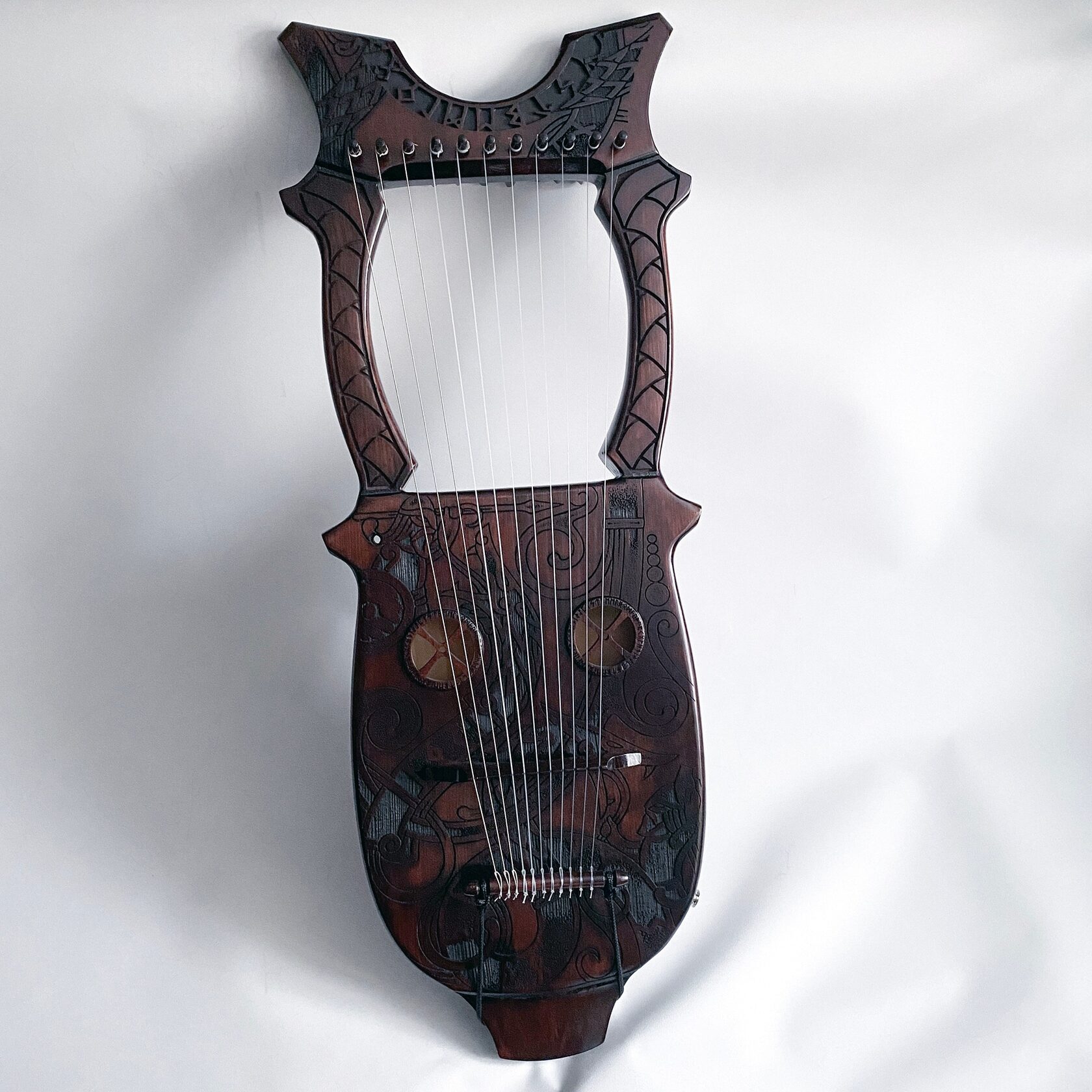
The venerable Kravik Lyre takes its name from a remarkable archaeological discovery in Norway. Its shape is elegant yet firm, carved from a single piece of wood, much as a ship’s hull might be shaped to brave the sea. With six strings traditionally tuned to modal scales, it lends itself beautifully to ancient ballads and experimental improvisation alike.
Equally celebrated is the Trossingen Lyre, unearthed in Germany and dated to the 6th century. Its intricate carvings and carefully crafted bridge reveal a society that prized both artistry and acoustics. To hold a replica of this instrument is to feel the bridge between Roman Europe and the early medieval north.
Sutton Hoo: Music of Kings
The Sutton Hoo Lyre, discovered in the famous ship burial in England, reminds us that music accompanied nobility into eternity. The instrument’s reconstruction demonstrates advanced woodworking and a resonant body capable of filling a hall without amplification. One can almost imagine a scop reciting heroic verse while gently striking its strings.
Bowed Traditions of Scandinavia
Tagelharpa and Jouhikko
The Tagelharpa, sometimes called a bowed lyre, produces a raw and haunting tone. Played with a horsehair bow, it bridges rhythm and melody in a way that feels both primal and refined. Closely related is the Finnish Jouhikko, whose drone strings create a hypnotic sonic foundation. These instruments likely accompanied dances, rituals, and winter gatherings when the nights were long and stories longer still.
Their construction is simple yet clever: a hollowed body, a flat soundboard, and strings that respond warmly to the friction of bow against hair. Modern makers often follow historical blueprints while subtly improving durability and tuning stability.
Zithers and Harps Across the Baltic
Kantele, Gusli, and Kokle
The Kantele of Finland is perhaps the gentlest of the northern zithers. Its shimmering tone suits lyrical melodies and meditative playing. According to Finnish epic tradition, the first kantele was fashioned from the jawbone of a giant pike, strung with the hair of a magical steed.
The Slavic Gusli and the Baltic Kokle share a family resemblance, with flat bodies and multiple strings tuned diatonically. These instruments were played in courts and cottages alike, serving both sacred hymns and lively folk tunes. Their bright timbre carries well in open spaces, making them ideal for communal performance.
The Enduring Harp
The ancient Harp in its northern forms differs from the grand orchestral harp of today. Smaller, lighter, and often diatonic, it was a storyteller’s companion. Its triangular frame allowed portability, and its voice—clear and bell-like—added dignity to poetry and praise.
Craftsmanship Then and Now
In former centuries, an instrument was shaped by hand tools, guided by intuition and tradition. Wood was chosen not only for strength but for spirit. Today’s artisans honor these methods, often using ash, oak, spruce, or maple, and finishing with natural oils or waxes. While modern strings may be synthetic or metal-wound, many players prefer traditional materials for authenticity of tone.
Buying such an instrument today is not merely a transaction. It is an adoption. Each piece invites exploration of modal scales, drone accompaniment, and the rhythmic pulse of ancient dance. Whether displayed upon a wall or played beside a hearth, it carries the quiet pride of northern heritage.
A Friendly Word to the Modern Musician
Do not be intimidated by their age or unfamiliar tunings. These instruments were made for community, not perfection. Their learning curve is welcoming, their sound forgiving, and their presence inspiring. Even a few simple notes can conjure images of fjords, forests, and firelit halls.
In choosing one, consider your musical aim. If you delight in melody and lyricism, the kantele or harp may suit you. If you crave rhythm and resonance, a lyre or tagelharpa will answer the call. If you wish to explore droning harmonies, the jouhikko stands ready.
Thus, with cheerful curiosity and a nod to history, you may bring into your life a sound that once traveled with explorers and poets. And in so doing, you become part of a very old, very musical story indeed.
Long before electric guitars and digital studios, music echoed through timber halls lit by fire and story. In the age we now call the Viking era, roughly from the late 8th to the 11th century, melodies were carried not by orchestras but by sturdy wooden instruments strung with gut and courage. These were not merely tools of entertainment; they were companions of poets, storytellers, and wanderers.
If you seek to buy Kravik Lyre, Tagelharpa, Jouhikko, Kantele, Gusli, Kokle, Harp, Trossingen Lyre, Sutton Hoo Lyre and many other scandinavian viking folk musical instruments, you are in truth stepping into a lineage that stretches back more than a thousand years. Each instrument bears the marks of a people who valued craftsmanship, myth, and melody in equal measure.
Enthusiasts of historical music often choose to buy Kravik Lyre, Tagelharpa, Jouhikko, Kantele, Gusli, Kokle, Harp, Trossingen Lyre, Sutton Hoo Lyre and many other Scandinavian Viking folk musical instruments from trusted makers like https://scandicinstruments.com/ .
The venerable Kravik Lyre takes its name from a remarkable archaeological discovery in Norway. Its shape is elegant yet firm, carved from a single piece of wood, much as a ship’s hull might be shaped to brave the sea. With six strings traditionally tuned to modal scales, it lends itself beautifully to ancient ballads and experimental improvisation alike.
Equally celebrated is the Trossingen Lyre, unearthed in Germany and dated to the 6th century. Its intricate carvings and carefully crafted bridge reveal a society that prized both artistry and acoustics. To hold a replica of this instrument is to feel the bridge between Roman Europe and the early medieval north.
The Sutton Hoo Lyre, discovered in the famous ship burial in England, reminds us that music accompanied nobility into eternity. The instrument’s reconstruction demonstrates advanced woodworking and a resonant body capable of filling a hall without amplification. One can almost imagine a scop reciting heroic verse while gently striking its strings.
The Tagelharpa, sometimes called a bowed lyre, produces a raw and haunting tone. Played with a horsehair bow, it bridges rhythm and melody in a way that feels both primal and refined. Closely related is the Finnish Jouhikko, whose drone strings create a hypnotic sonic foundation. These instruments likely accompanied dances, rituals, and winter gatherings when the nights were long and stories longer still.
Their construction is simple yet clever: a hollowed body, a flat soundboard, and strings that respond warmly to the friction of bow against hair. Modern makers often follow historical blueprints while subtly improving durability and tuning stability.
The Kantele of Finland is perhaps the gentlest of the northern zithers. Its shimmering tone suits lyrical melodies and meditative playing. According to Finnish epic tradition, the first kantele was fashioned from the jawbone of a giant pike, strung with the hair of a magical steed.
The Slavic Gusli and the Baltic Kokle share a family resemblance, with flat bodies and multiple strings tuned diatonically. These instruments were played in courts and cottages alike, serving both sacred hymns and lively folk tunes. Their bright timbre carries well in open spaces, making them ideal for communal performance.
The ancient Harp in its northern forms differs from the grand orchestral harp of today. Smaller, lighter, and often diatonic, it was a storyteller’s companion. Its triangular frame allowed portability, and its voice—clear and bell-like—added dignity to poetry and praise.
In former centuries, an instrument was shaped by hand tools, guided by intuition and tradition. Wood was chosen not only for strength but for spirit. Today’s artisans honor these methods, often using ash, oak, spruce, or maple, and finishing with natural oils or waxes. While modern strings may be synthetic or metal-wound, many players prefer traditional materials for authenticity of tone.
Buying such an instrument today is not merely a transaction. It is an adoption. Each piece invites exploration of modal scales, drone accompaniment, and the rhythmic pulse of ancient dance. Whether displayed upon a wall or played beside a hearth, it carries the quiet pride of northern heritage.
Do not be intimidated by their age or unfamiliar tunings. These instruments were made for community, not perfection. Their learning curve is welcoming, their sound forgiving, and their presence inspiring. Even a few simple notes can conjure images of fjords, forests, and firelit halls.
In choosing one, consider your musical aim. If you delight in melody and lyricism, the kantele or harp may suit you. If you crave rhythm and resonance, a lyre or tagelharpa will answer the call. If you wish to explore droning harmonies, the jouhikko stands ready.
Thus, with cheerful curiosity and a nod to history, you may bring into your life a sound that once traveled with explorers and poets. And in so doing, you become part of a very old, very musical story indeed.